For statin intolerant patients, the CV benefit of bempedoic acid is CLEAR1
THE ONLY CV OUTCOMES TRIAL
to study an oral nonstatin in partial and complete statin intolerant patients at high risk for a CV event1

CLEAR Outcomes exclusively enrolled 13,970 patients unable to take recommended statin therapy to evaluate reduction in risk of MACE-4* with bempedoic acid.1

Bempedoic acid receives multiple Class 1 recommendations
To lower LDL-C and reduce CV risk for adults who experience statin-attributed muscle symptoms2

Bempedoic acid is the only nonstatin with a Level A recommendation†
For both primary prevention‡ and secondary prevention§ in statin intolerant patients with diabetes3

Bempedoic acid receives Class 1, Level A‡ and Class 1, Level B§ recommendations
For patients with statin intolerance4
Take a closer look at the NEXLETOL study design

Number of patients
13,970

Median duration of follow-up
3.4 years

Patients with diabetes1
46%
77%

Patients with complete statin intolerance1

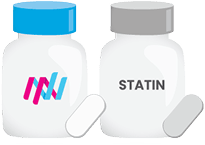
23%
Patients with partial statin intolerance1
Study Design1
Randomized, double-blind, placebo-controlled, CV event-driven trial in 13,970 adult patients who were not receiving recommended statin therapy(< low-intensity doses), and who had CVD or were at high risk for a CVD event based on meeting at least one of the following criteria: (1) diabetes mellitus (type 1 or type 2) in females over 65 years of age, or males over 60 years of age; (2) a Reynolds risk score >30% or a SCORE risk score >7.5% over 10 years; (3) a coronary artery calcium score >400 Agatston units at any time in the past. Patients were randomized to receive once-daily NEXLETOL 180 mg (n=6992) or placebo (n=6978). Patients were followed for at least 24 months after randomization and treated until at least 1620 patients experienced a MACE-4 endpoint and at least 810 patients experienced a MACE-3 endpoint.
Choose NEXLIZET or NEXLETOL for managing statin intolerance
Treating patients with statin intolerance can be challenging. But NEXLIZET and NEXLETOL are the only oral nonstatins FDA approved to reduce CV risk in primary prevention and secondary prevention patients with statin intolerance.
Patients can’t take a statin? Make NEXLIZET happen!
CV outcomes in statin intolerance
Only the CLEAR Outcomes trial studied and demonstrated the impact of bempedoic acid on cardiovascular risk in statin intolerant patients.1
The nonstatin difference

NEXLIZET and NEXLETOL contain bempedoic acid, which works differently than statins and is not active in skeletal muscle.7
Studied in patients like yours
This global study evaluated both primary and secondary prevention populations.1
*MACE-4 includes time to first occurrence of nonfatal MI, coronary revascularization, nonfatal stroke, or CV death.
†Level A recommendations from the ADA are based on clear evidence from well-conducted, generalizable, randomized, controlled trials that are adequately powered.3
‡CV risk and LDL-C reduction.3,4
§LDL-C reduction.3,4

Interested in samples?
Get patients started with a 14-day sample of NEXLIZET or NEXLETOL.
Request SamplesINDICATION AND IMPORTANT SAFETY INFORMATION
Indication
NEXLIZET and NEXLETOL are indicated:
- bempedoic acid, a component of NEXLIZET and NEXLETOL, is indicated to reduce the risk of major adverse cardiovascular events (cardiovascular death, myocardial infarction, stroke, or coronary revascularization) in adults at increased risk for these events who are unable to take recommended statin therapy (including those not taking a statin).
- as an adjunct to diet and exercise:
- NEXLIZET is indicated to reduce LDL-C in adults with hypercholesterolemia, including HeFH.
- NEXLETOL is indicated, in combination with other LDL-C lowering therapies or alone when concomitant LDL-C lowering therapy is not possible, to reduce LDL-C in adults with hypercholesterolemia, including HeFH.
IMPORTANT SAFETY INFORMATION
- NEXLIZET and NEXLETOL are contraindicated in patients with a prior hypersensitivity to bempedoic acid or ezetimibe or any of the excipients. Serious hypersensitivity reactions including anaphylaxis, angioedema, rash, and urticaria have been reported.
- Hyperuricemia : Bempedoic acid, a component of NEXLIZET and NEXLETOL, may increase blood uric acid levels, which may lead to gout. Monitor as clinically indicated and initiate treatment with urate-lowering drugs as appropriate.
- Tendon Rupture : Bempedoic acid is associated with an increased risk of tendon rupture or injury. Tendon rupture occurred in 0.5% of patients treated with bempedoic acid in primary hypercholesterolemia trials, versus 0% on placebo. In the cardiovascular outcomes trial, the rates were 1.2% for bempedoic acid and 0.9% for placebo. Discontinue NEXLIZET or NEXLETOL at the first sign of tendon rupture. Consider alternative therapy in patients who have a history of tendon disorders or tendon rupture.
- The most common adverse reactions in the primary hypercholesterolemia trials of bempedoic acid in ≥2% of patients and greater than placebo were upper respiratory tract infection, muscle spasms, hyperuricemia, back pain, abdominal pain or discomfort, bronchitis, pain in extremity, anemia, and elevated liver enzymes.
- Adverse reactions reported in ≥2% of patients treated with ezetimibe (a component of NEXLIZET) and at an incidence greater than placebo in clinical trials were upper respiratory tract infection, diarrhea, arthralgia, sinusitis, pain in extremity, fatigue, and influenza.
- The most common adverse reactions (incidence ≥3% and greater than placebo) observed with NEXLIZET but not observed in clinical trials of bempedoic acid or ezetimibe, were urinary tract infection, nasopharyngitis, and constipation.
- The most common adverse reactions in the cardiovascular outcomes trial for bempedoic acid, at an incidence of ≥2% and 0.5% greater than placebo, were hyperuricemia, renal impairment, anemia, elevated liver enzymes, muscle spasms, gout, and cholelithiasis.
- Concomitant use of NEXLIZET or NEXLETOL with greater than 20 mg of simvastatin or 40 mg of pravastatin should be avoided due to the potential for increased risk of simvastatin- or pravastatin-related myopathy. Concomitant use with fibrates may increase triglycerides and decrease high-density lipoprotein cholesterol. Monitor and adjust therapies as recommended.
- Discontinue NEXLIZET or NEXLETOL when pregnancy is recognized unless the benefits of therapy outweigh the potential risks to the fetus. The benefits of breastfeeding should be considered along with the mother’s clinical need for NEXLIZET or NEXLETOL and any potential adverse effects on the breastfed infant from NEXLIZET or NEXLETOL or from the underlying maternal condition.
Report pregnancies to Esperion Therapeutics, Inc. Adverse Event reporting line at 1-833-377-7633.
Please see full Prescribing Information for NEXLIZET and NEXLETOL.
INDICATION AND IMPORTANT SAFETY INFORMATION
Indication
NEXLIZET and NEXLETOL are indicated:
- bempedoic acid, a component of NEXLIZET and NEXLETOL, is indicated to reduce the risk of major adverse cardiovascular events (cardiovascular death, myocardial infarction, stroke, or coronary revascularization) in adults at increased risk for these events who are unable to take recommended statin therapy (including those not taking a statin).
- as an adjunct to diet and exercise:
- NEXLIZET is indicated to reduce LDL-C in adults with hypercholesterolemia, including HeFH.
- NEXLETOL is indicated, in combination with other LDL-C lowering therapies or alone when concomitant LDL-C lowering therapy is not possible, to reduce LDL-C in adults with hypercholesterolemia, including HeFH.
IMPORTANT SAFETY INFORMATION
- NEXLIZET and NEXLETOL are contraindicated in patients with a prior hypersensitivity to bempedoic acid or ezetimibe or any of the excipients. Serious hypersensitivity reactions including anaphylaxis, angioedema, rash, and urticaria have been reported.
- Hyperuricemia : Bempedoic acid, a component of NEXLIZET and NEXLETOL, may increase blood uric acid levels, which may lead to gout. Monitor as clinically indicated and initiate treatment with urate-lowering drugs as appropriate.
- Tendon Rupture : Bempedoic acid is associated with an increased risk of tendon rupture or injury. Tendon rupture occurred in 0.5% of patients treated with bempedoic acid in primary hypercholesterolemia trials, versus 0% on placebo. In the cardiovascular outcomes trial, the rates were 1.2% for bempedoic acid and 0.9% for placebo. Discontinue NEXLIZET or NEXLETOL at the first sign of tendon rupture. Consider alternative therapy in patients who have a history of tendon disorders or tendon rupture.
- The most common adverse reactions in the primary hypercholesterolemia trials of bempedoic acid in ≥2% of patients and greater than placebo were upper respiratory tract infection, muscle spasms, hyperuricemia, back pain, abdominal pain or discomfort, bronchitis, pain in extremity, anemia, and elevated liver enzymes.
- Adverse reactions reported in ≥2% of patients treated with ezetimibe (a component of NEXLIZET) and at an incidence greater than placebo in clinical trials were upper respiratory tract infection, diarrhea, arthralgia, sinusitis, pain in extremity, fatigue, and influenza.
- The most common adverse reactions (incidence ≥3% and greater than placebo) observed with NEXLIZET but not observed in clinical trials of bempedoic acid or ezetimibe, were urinary tract infection, nasopharyngitis, and constipation.
- The most common adverse reactions in the cardiovascular outcomes trial for bempedoic acid, at an incidence of ≥2% and 0.5% greater than placebo, were hyperuricemia, renal impairment, anemia, elevated liver enzymes, muscle spasms, gout, and cholelithiasis.
- Concomitant use of NEXLIZET or NEXLETOL with greater than 20 mg of simvastatin or 40 mg of pravastatin should be avoided due to the potential for increased risk of simvastatin- or pravastatin-related myopathy. Concomitant use with fibrates may increase triglycerides and decrease high-density lipoprotein cholesterol. Monitor and adjust therapies as recommended.
- Discontinue NEXLIZET or NEXLETOL when pregnancy is recognized unless the benefits of therapy outweigh the potential risks to the fetus. The benefits of breastfeeding should be considered along with the mother’s clinical need for NEXLIZET or NEXLETOL and any potential adverse effects on the breastfed infant from NEXLIZET or NEXLETOL or from the underlying maternal condition.
Report pregnancies to Esperion Therapeutics, Inc. Adverse Event reporting line at 1-833-377-7633.
Please see full Prescribing Information for NEXLIZET and NEXLETOL.
ACC=American College of Cardiology; ADA=American Diabetes Association; AHA=American Heart Association; CV=cardiovascular; CVD=cardiovascular disease; EAS=European Atherosclerosis Society; ESC=European Society of Cardiology; HeFH=heterozygous familial hypercholesterolemia; LDL-C=low-density lipoprotein cholesterol; MACE=major adverse cardiovascular event; MI=myocardial infarction.
References
1. Nissen SE, Lincoff DB, Ray KK, et al. Bempedoic acid and cardiovascular outcomes in statin-intolerant patients. N Engl J Med. 2023;388:1353-1364. 2. Blumenthal RS, et al. J Am Coll Cardiol. 2026 Mar 13:S0735-1097(25)10254-4. doi:10.1016/j.jacc.2025.11.016 3. American Diabetes Association Professional Practice Committee. 10. Cardiovascular disease and risk management: standards of care in diabetes—2026. Diabetes Care. 2026;49(suppl 1):S216-S245. 4. Mach F, Koskinas KC, Roeters van Lennep JE, et al. 2025 Focused Update of the 2019 ESC/EAS Guidelines for the management of dyslipidaemias. Eur Heart J. 2025;46(42):4359-4378. 5. NEXLETOL. Prescribing information. Esperion Therapeutics, Inc. 6. NEXLIZET. Prescribing information. Esperion Therapeutics, Inc. 7. Pinkosky SL, Newton RS, Day EA, et al. Liver-specific ATP-citrate lyase inhibition by bempedoic acid decreases LDL-C and attenuates atherosclerosis. Nat Commun. 2016;7(13457):1-13.